Refractories ›› 2021, Vol. 55 ›› Issue (6): 502-504.DOI: 10.3969/j.issn.1001-1935.2021.06.009
Previous Articles Next Articles
Hu Qiguo(), Wang Minghua, Shao Qing, Li Ji, Li Xiaolong
Received:
Online:
Published:
胡其国(), 王明华, 邵晴, 李济, 李小龙
作者简介:
基金资助:
Abstract:
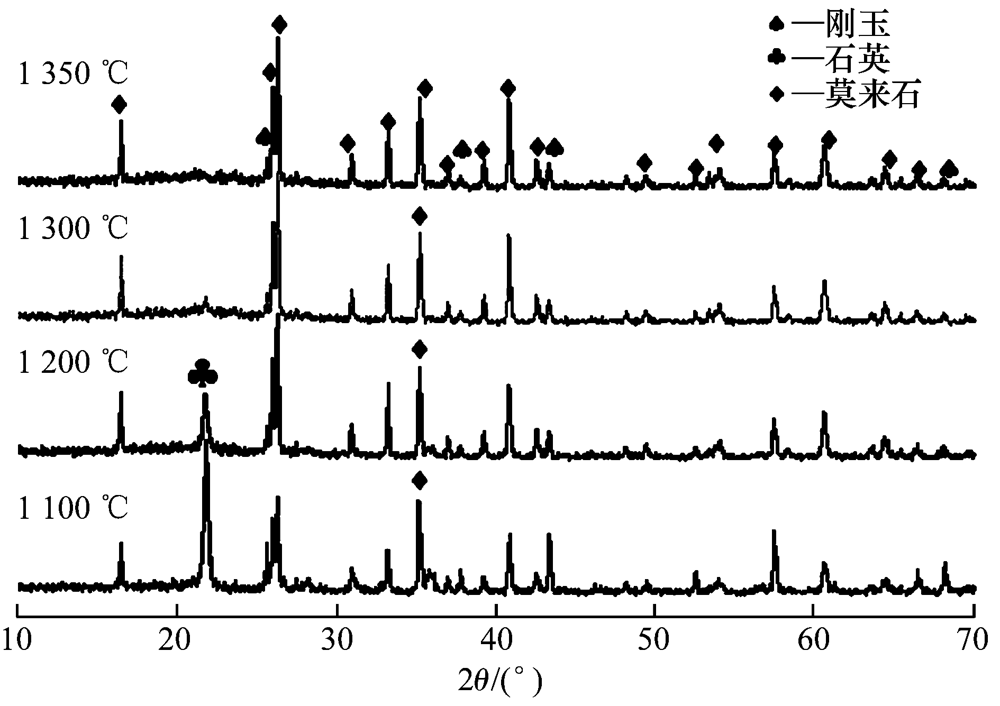
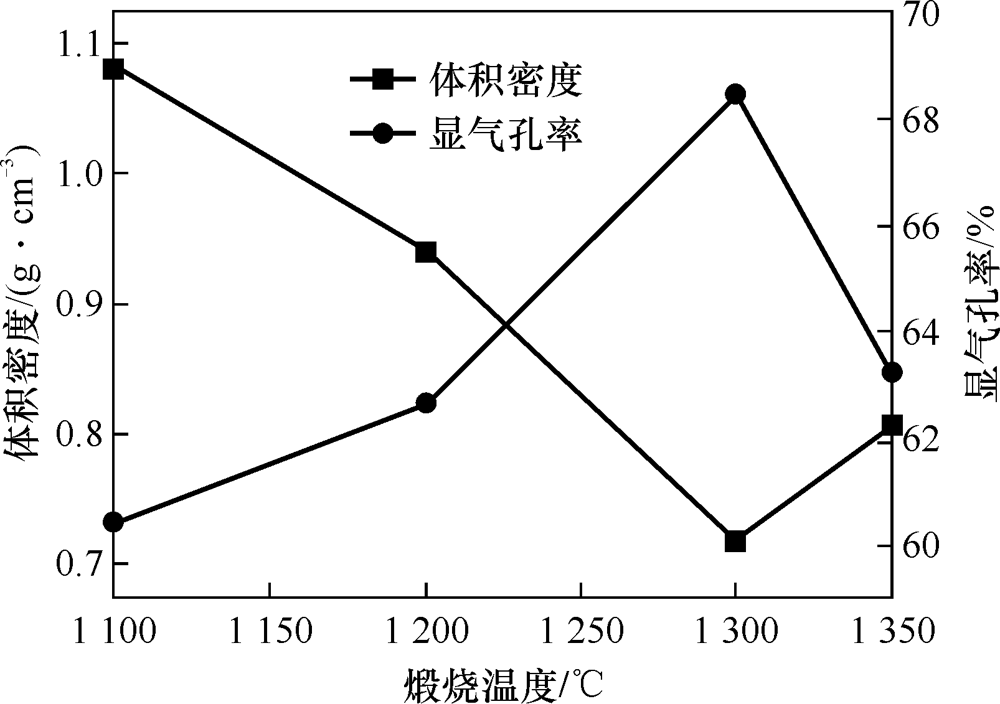
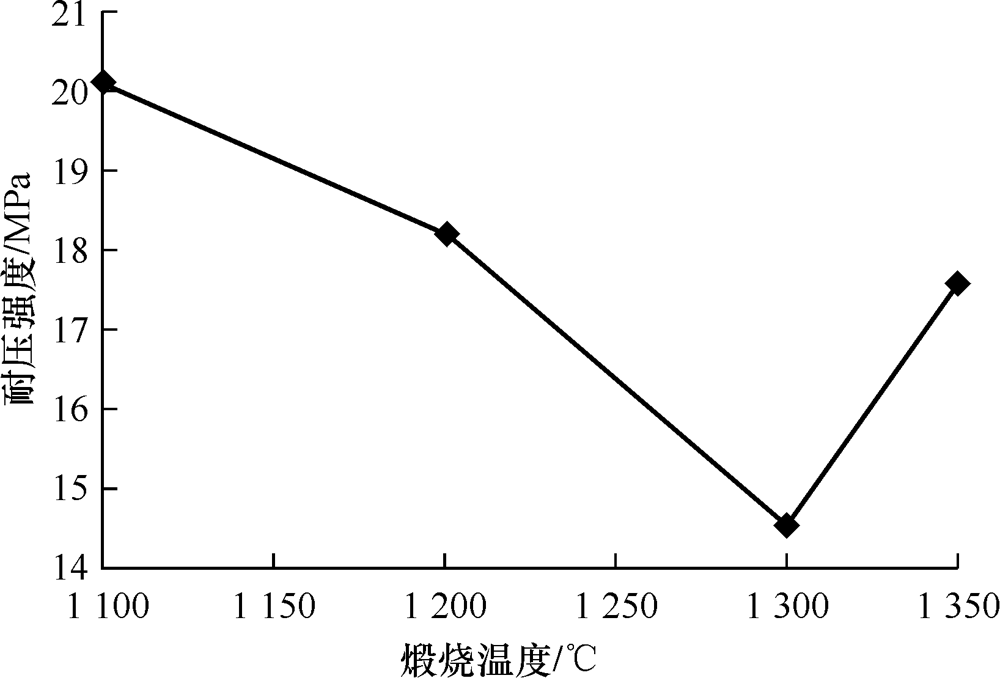
For improve the high value-added utilization of fly ash floater,porous mullite ceramic materials were prepared by adhesion method and solid-phase sintering using fly ash floater as the template,bauxite as the aluminum source,AlF3 and V2O5 as the additives.Effects of the calcination temperature (1 100,1 200,1 300,and 1 350 ℃,respectively) on the phase composition,the microstructure and the properties of the prepared materials were studied.The results show that: when the temperature changes from 1 100 ℃ to 1 350 ℃,the diffraction peaks of the mullite gradually increase,and these of the quartz gradually weaken until disappear,the apparent porosity of the specimens increases firstly and then decreases,while the bulk density and the compressive strength are on the contrary;when the calcination temperature is 1 300 ℃,the specimen has the apparent porosity of 68.4%,the bulk density of 0.72 g·cm-3,and the compressive strength of 14.6 MPa.
Key words: calcination temperature, fly ash floater, porous mullite, bauxite, microstructure
摘要:
为了粉煤灰漂珠的高附加值利用,以粉煤灰漂珠为模板,铝矾土为铝源,AlF3和V2O5为添加剂,采用黏附法与固相烧结技术制备了莫来石质多孔陶瓷材料,研究了煅烧温度(分别为1 100、1 200、1 300和1 350 ℃)对莫来石质多孔陶瓷材料物相组成、显微形貌和性能的影响。结果表明:1)随着煅烧温度从1 100 ℃升高至 1 350 ℃,试样中莫来石的衍射峰逐渐增强,石英衍射峰逐渐减弱直至消失;2)随着煅烧温度从1 100 ℃升高至1 350 ℃,试样的显气孔率先增大后减少,体积密度和耐压强度先减少后增大;3)当煅烧温度为1 300 ℃时,试样的显气孔率为68.4%,体积密度为0.72 g·cm-3,耐压强度为14.6 MPa。
关键词: 煅烧温度, 粉煤灰漂珠, 多孔莫来石, 铝矾土, 显微结构
CLC Number:
TB332
Hu Qiguo, Wang Minghua, Shao Qing, Li Ji, Li Xiaolong. Effect of calcination temperature on properties of porous mullite ceramic materials[J]. Refractories, 2021, 55(6): 502-504.
胡其国, 王明华, 邵晴, 李济, 李小龙. 煅烧温度对莫来石质多孔陶瓷材料性能的影响[J]. 耐火材料, 2021, 55(6): 502-504.
0 / / Recommend
Add to citation manager EndNote|Ris|BibTeX
URL: http://www.nhcl.cn/EN/10.3969/j.issn.1001-1935.2021.06.009
http://www.nhcl.cn/EN/Y2021/V55/I6/502
Fig.1 XRD patterns of samples calcined at different temperatures
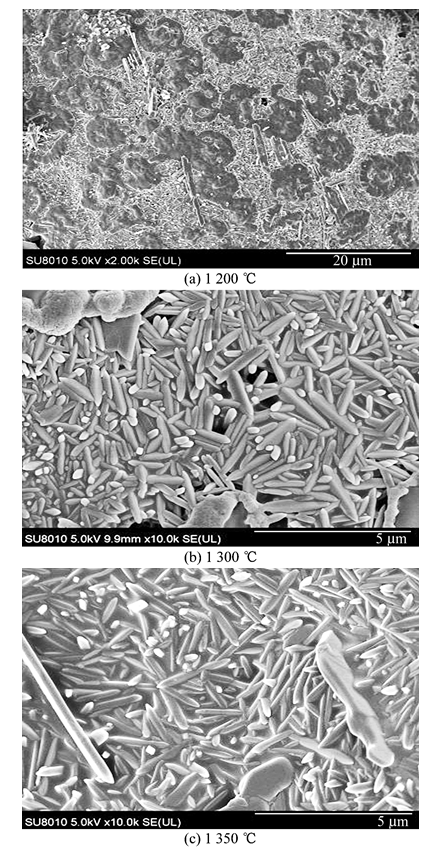
Fig.2 SEM pictures of samples calcined at different tem-peratures
Fig.3 Apparent porosity and bulk density of samples calcined at different temperatures
Fig.4 Compressive strength of samples calcined at different temperatures